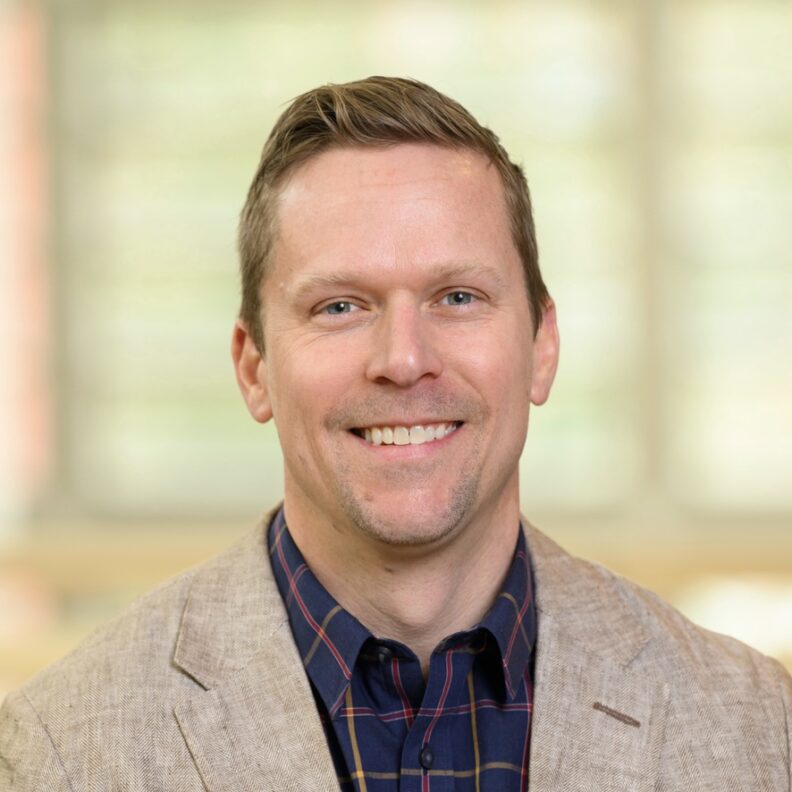
- Associate Professor, History
- Interim Chair, History
- CAS Faculty Fellow
Biography
Research and teaching interests: histories of race, empire, capitalism, sport, culture, education, environment, cities
Education
- Ph.D., History, Georgia State University, 2010
- M.A., History, Auburn University, 2005
- B.A., History & Political Science, Presbyterian College, 2003
Selected Publications
- “Bronze Hammer: Race and the Politics of Commemorating Henry Louis Aaron.” Atlanta Studies, February 2, 2021.
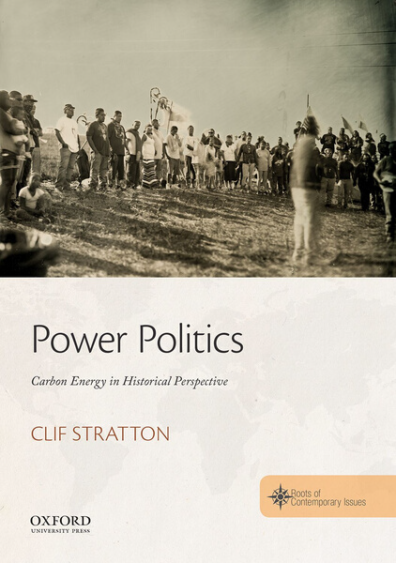
- Power Politics: Carbon Energy in Historical Perspective. New York: Oxford University Press, 2021.
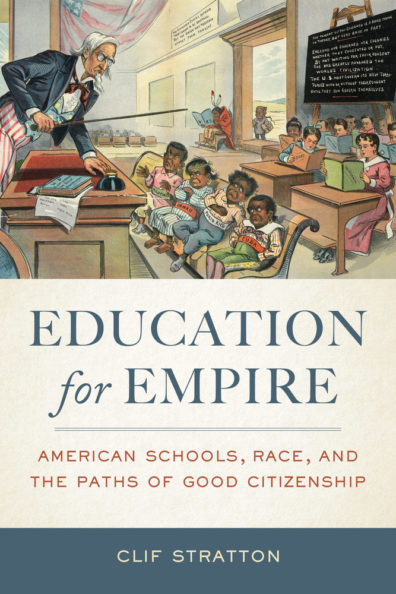
- Education for Empire: American Schools, Race, and the Paths of Good Citizenship. Oakland: University of California Press, 2016.
Awards
- Mid-Career Achievement Award for Career-Track Faculty, College of Arts and Sciences (2020)
- Teaching Excellence Award for Clinical Faculty, College of Arts and Sciences (2019)
- President’s Distinguished Teaching Award for Clinical Faculty, Office of the Provost (2019)
- Eugene Asher Distinguished Teaching Award, American Historical Association (2014)
- Richard G. Law Excellence Award for Undergraduate Teaching, Office of Undergraduate Education (2014)


Courses Taught
- History 105 – Roots of Contemporary Issues [ROOT]
- History 235 – African American History [HUM]
- History 224 – Baseball and American Social Movements [EQJS]
- History 300 – Writing About History [M]
- History 305 – The Roots of Contemporary Issues (for transfer students) [ROOT]
- History 314 – Immigration, Migration, and Ethnic Identity [DIVR]
- History 395 – United States Empire
- History 417 – The Rise of Modern America [CAPS]
- History 418 – United States History, 1914-1945 [HUM]
- History 420 – United States History, 1980-present [CAPS]
- Honors 270 – Sports and Politics in American Society and History
- Honors 280 – Race and Resistance in African American History
About me
I joined Washington State University in 2010 after completing a Ph.D. in History at Georgia State University in Atlanta, where I was born and raised. In both my teaching and research, I am centrally interested in how race and racism have shaped the world we inhabit, including how it intersects with things ranging from education, environmental change, global politics, and popular culture. I am also committed to ensuring that every student that I teach (and a lot of students that I don’t teach) have a transformative learning experience at WSU. My teaching is guided by principles of equity, belonging, and curiosity. Learning and engagement are the two requirements for every student in my courses.
My latest project, Race and Recreation on Atlanta’s Baseball Diamonds, will offer a historical analysis of how conflicts over race and belonging played out through the provision and use of Atlanta’s baseball parks – a social infrastructure that spanned little leagues, high schools, colleges, and professional levels. Read a recent publication that stems from this broader project at Atlanta Studies.
When I’m not on campus working with colleagues and students, I can be found spinning all kinds of musical genres on vinyl; reading nonfiction (I’m slowly coming around to fiction); hitting the road with my family for skiing, camping, hiking, paddle boarding, and other outdoor romps; and fastidiously – and sometimes insufferably – following the 2021 World Series Champion Atlanta Braves baseball exploits.