What to expect from a history degree AFTER graduation
Visit Candid Career’s Major Explorer to watch interviews from specialists offering insight on 17 different career opportunities for History Majors
To find out more about the attributes employers are seeking among recent college graduates, visit the National Association of Colleges and Employers.
In addition to being a core major for a liberal arts degree, an undergraduate degree in history can lead to work as a teacher, historian, archivist, librarian, information specialist, writer, researcher, or work in government service.
With further study, you can go into college teaching, business, medicine, law, politics, or ministry. Double majors—combining history with one or more such fields—are easily accommodated.
The study of history is an excellent way to develop skills in critical reading and the ability to come to draw conclusions by analyzing and interpreting materials. These skills can serve as a foundation for success in a variety of disciplines.
For example, you can combine your program in history with selected classes in political science, English, speech, and business to prepare for law school. Students have also combined a pre-med program with a history major; in fact, the percentage of those with history majors admitted to medical schools has sometimes been higher than applicants with biology majors.
Because history is one of the best fields in which to receive a broad and liberal education, job opportunities for historians are not limited to teaching and writing history. Training in historical methodology fits persons for many types of historical and non-historical careers outside of teaching. Governmental service offers careers as historians, archivists, information specialists, immigration officers, and social security officials. The Interior and State Departments, Smithsonian Institution, Agriculture Department, Central Intelligence Agency, and the National Security Agency also fill positions with persons with historical training. Our students usually do well in the competitive examinations given by the United States Civil Service Commission and by the State Department.
WSU History Alumni Testimonials
See what WSU History alumni are doing with their degrees.
Mr. Bradley Richardson is the Executive Director of the Clark County Historical Museum in Vancouver, WA
Resources & Guidance
The American Historical Association wants you know that History is a Useful Major. Read about what your opportunities after college look like if you choose to graduate with a degree in History.
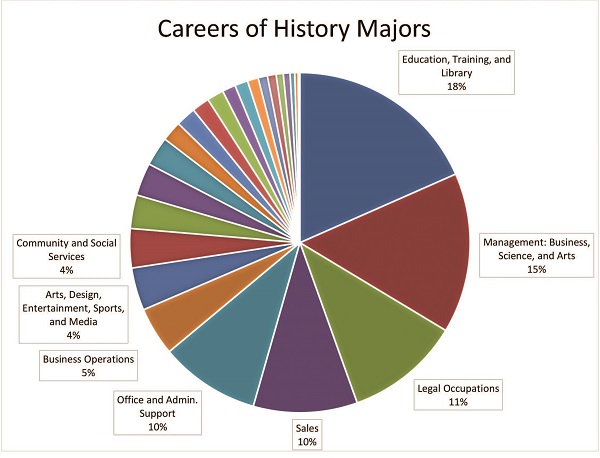
USA Today encourages liberal arts majors to pair their history degree with specific skills in fields such as “marketing, sales, business, social media, graphic design, data analysis and management, and information technology or support.”
Read these Tips for Picking a College Major. History majors thrive not because the field promises the highest average paycheck, but because passion fuels excellence, and graduates who excel in what they love often out-earn and outlast those who grudgingly chase ‘practical’ majors.
WSU’s own Alumni Association offers students and alumni access to job and internship listings nationwide. The site also provides up to date information on career fairs, workshops and other events taking place on campus.
Career opportunities in History
- Account representative
- Administrative assistant
- Admissions officer
- Archaeologist
- Archivist
- Art conservator
- Artifacts conservator
- Bibliographer
- Biographer
- Career counselor
- Caseworker
- Claims adjudicator
- Collections manager
- Communications assistant
- Conference coordinator
- Consultant
- Corporate historian
- Counselor
- Curator
- Database/records manager
- Detective
- Development associate for research
- Director of visitor services
- Editor
- Education programs coordinator
- Educational equipment and supplies salesperson
- Educator
- Executive director
- Financial aid counselor
- Golf Coach
- Government relations
- Historian
- Historic preservation planner
- Human resources professional
- Institutional researcher
- Intelligence specialist
- Interpretive guide
- Journalist
- Labor organizer
- Lawyer
- Legislative research assistant
- Librarian
- Loan officer
- Management consultant
- Manufacturer’s representative
- Market analyst/researcher
- Media specialist
- Museum technician
- Nature education interpreter
- Network coordinator
- Outdoor education instructor
- Paralegal
- Park ranger
- Personnel officer
- Pharmaceutical representative
- Project archivist
- Project planner/coordinator
- Public relations
- Radio/TV announcer
- Reference librarian
- Registrar
- Researcher (national TV news)
- Securities information researcher
- Site manager/administrator
- Software specialist
- Tour director
- Travel agent